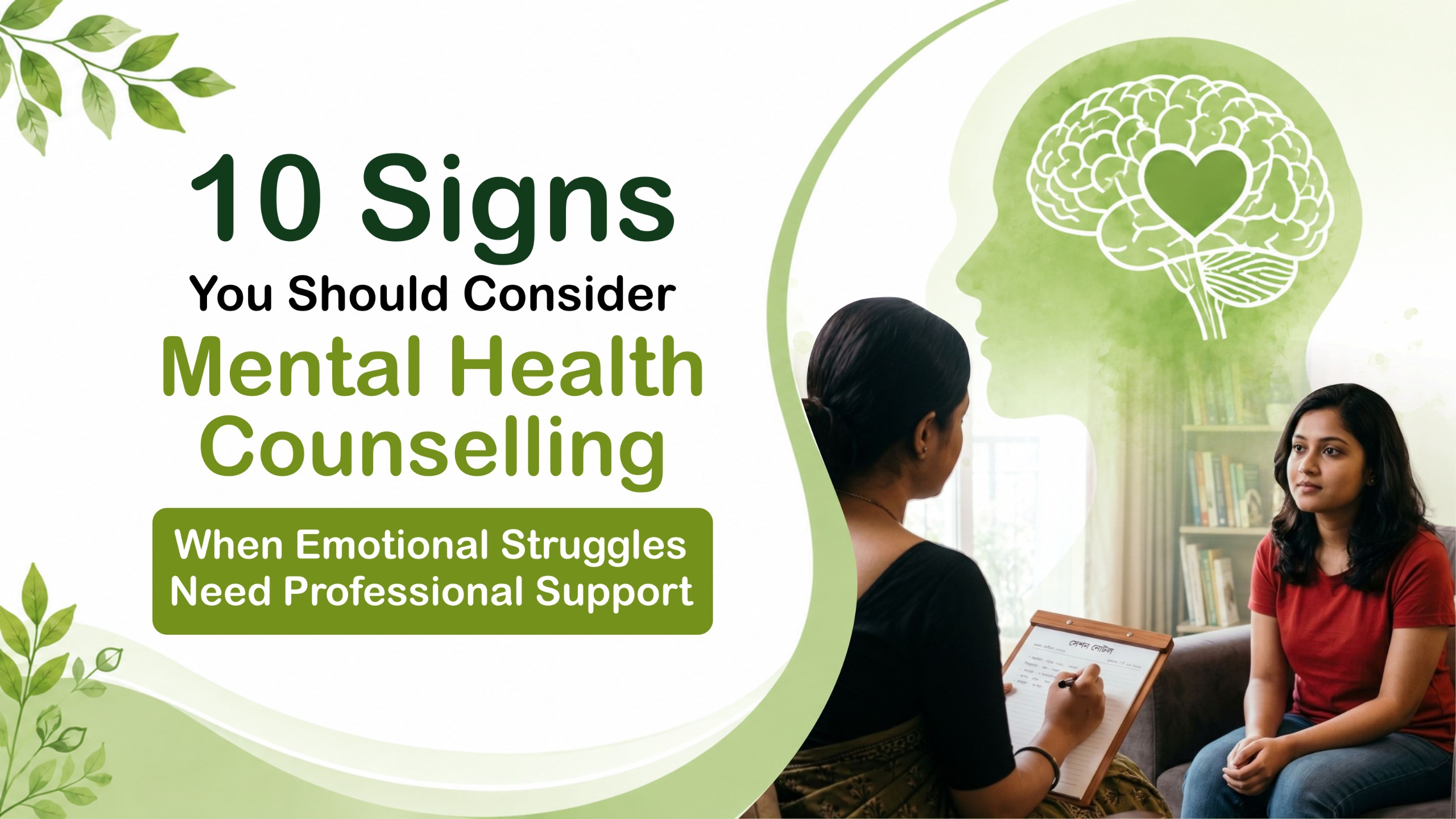
10 Signs You Should Consider Mental Health Counselling
Is Your Mind Asking for Help?
Imagine this.
Your phone starts slowing down.
Apps stop responding.
The battery drains faster than usual.
Would you ignore it for months?
Probably not.
Yet many people ignore similar warning signs from their minds every day.
Persistent stress.
Constant worry.
Emotional exhaustion.
Sleepless nights.
A feeling that something just isn't right.
Mental health challenges rarely appear overnight. They often begin quietly, disguised as everyday stress or temporary sadness. Over time, these struggles can affect relationships, work performance, physical health, and overall quality of life.
According to the World Health Organization, nearly one in every eight people globally lives with a mental health condition, making mental wellbeing one of the most important public health concerns of our time.
The good news?
Early intervention through mental health counselling can make a significant difference in recovery, resilience, and emotional wellbeing.
So how do you know when it's time to seek support?
Let's explore the signs.
Why Mental Health Counselling Matters
Many people believe counselling is only for those facing severe mental illness.
This is one of the biggest misconceptions about mental health.
In reality, counselling helps people navigate everyday emotional challenges such as:
Seeking help early often prevents emotional struggles from becoming more serious.
Think of counselling as preventive healthcare for your mind.
1. You Feel Constantly Overwhelmed
Do simple tasks feel unusually difficult?
Does your daily to do list seem impossible to manage?
Occasional stress is normal.
Living in a constant state of overwhelm is not.
When emotional demands exceed your coping capacity, your mind starts sending signals that it needs support.
Ask Yourself:
If your answer is yes, counselling may help restore balance and clarity.
2. You Cannot Stop Overthinking
One conversation.
One mistake.
One future possibility.
Your mind keeps replaying them endlessly.
Overthinking is among the most common mental health concerns today.
What begins as problem solving often turns into mental exhaustion.
Overthinking can contribute to:
Professional counselling helps identify unhealthy thought patterns and replace them with healthier coping strategies.
3. Stress Has Become Your Normal State
Many people wear stress like a badge of honour.
But chronic stress can quietly affect every area of life.
Long term stress has been linked to:
If you feel stressed most days and cannot remember the last time you felt genuinely relaxed, it may be time to seek mental health support.
4. You Feel Sad, Empty, or Hopeless for Weeks
Everyone experiences sadness.
Depression is different.
Depression often appears as:
Many people struggling with depression continue going to work or attending classes while silently suffering.
If sadness feels like a permanent companion, professional help can make a difference.
5. Anxiety Is Controlling Your Life
Anxiety goes beyond occasional nervousness.
It may show up as:
When anxiety starts interfering with daily functioning, relationships, work, or studies, counselling can help you regain control.
6. Your Relationships Are Being Affected
Mental health challenges often impact the people closest to us.
You may notice:
Sometimes relationship conflicts are symptoms of deeper emotional struggles.
Counselling can help improve emotional awareness and communication skills.
7. Sleep Problems Have Become Common
Sleep and mental health are closely connected.
Poor mental health can disrupt sleep.
Poor sleep can worsen mental health.
If you regularly experience:
your mind may be asking for support.
8. You No Longer Enjoy Things You Once Loved
Think about your favourite hobby.
Your favourite outing.
Your favourite people.
Do they still bring you joy?
Loss of interest in previously enjoyable activities is often an early sign of emotional distress, depression, or burnout.
This change should never be ignored.
9. You Are Coping in Unhealthy Ways
When emotional pain remains unresolved, people often seek temporary escapes.
Common unhealthy coping mechanisms include:
These behaviours may provide short term relief but rarely address the root cause.
Mental health counselling helps develop healthier coping strategies that support long term wellbeing.
10. You Do Not Feel Like Yourself Anymore
This may be the most important sign of all.
No major crisis.
No obvious symptom.
Just a quiet feeling that something has changed.
You feel disconnected.
Less motivated.
Less hopeful.
Less present.
Trust that feeling.
Often, our minds recognise emotional struggles before we can fully explain them.
A Quick Self Check
How many signs resonated with you?
0 to 2 Signs
You may be experiencing normal life stress, but continue prioritising self care and emotional wellbeing.
3 to 5 Signs
Your mental health may benefit from professional guidance and support.
6 or More Signs
Seeking mental health counselling could be an important step toward recovery and emotional wellness.
Remember, counselling is not only for crises.
It is also for prevention, growth, healing, and resilience.
The Reality of Mental Health in India
Mental health concerns are more common than many people realise.
Millions of Indians experience anxiety, depression, stress related disorders, and emotional difficulties every year.
Yet many continue suffering in silence due to stigma, fear, or uncertainty about where to seek help.
The most powerful step is often the first one:
Reaching out.
You Do Not Have to Struggle Alone
At Manam Foundation, we believe that mental health support should be compassionate, confidential, accessible, and free from judgment.
Whether you are experiencing anxiety, depression, emotional distress, burnout, relationship challenges, or simply feeling overwhelmed, professional support can help you move toward healing and recovery.
Seeking help is not a sign of weakness.
It is a sign that you value your wellbeing enough to take care of it.
Your mental health matters.
Your feelings are valid.
Recovery is possible.
And support is available.
About Manam Foundation
Manam Foundation is dedicated to promoting mental health awareness, emotional wellbeing, counselling support, psychological wellness, and recovery focused care. Through education, advocacy, counselling, and community support, we strive to create a society where mental health is understood, respected, and prioritised.
Manam Foundation ,Lewis Road Bhubaneswar,751002